Early Start: Preschool Politics in the United States by Andrew Karch
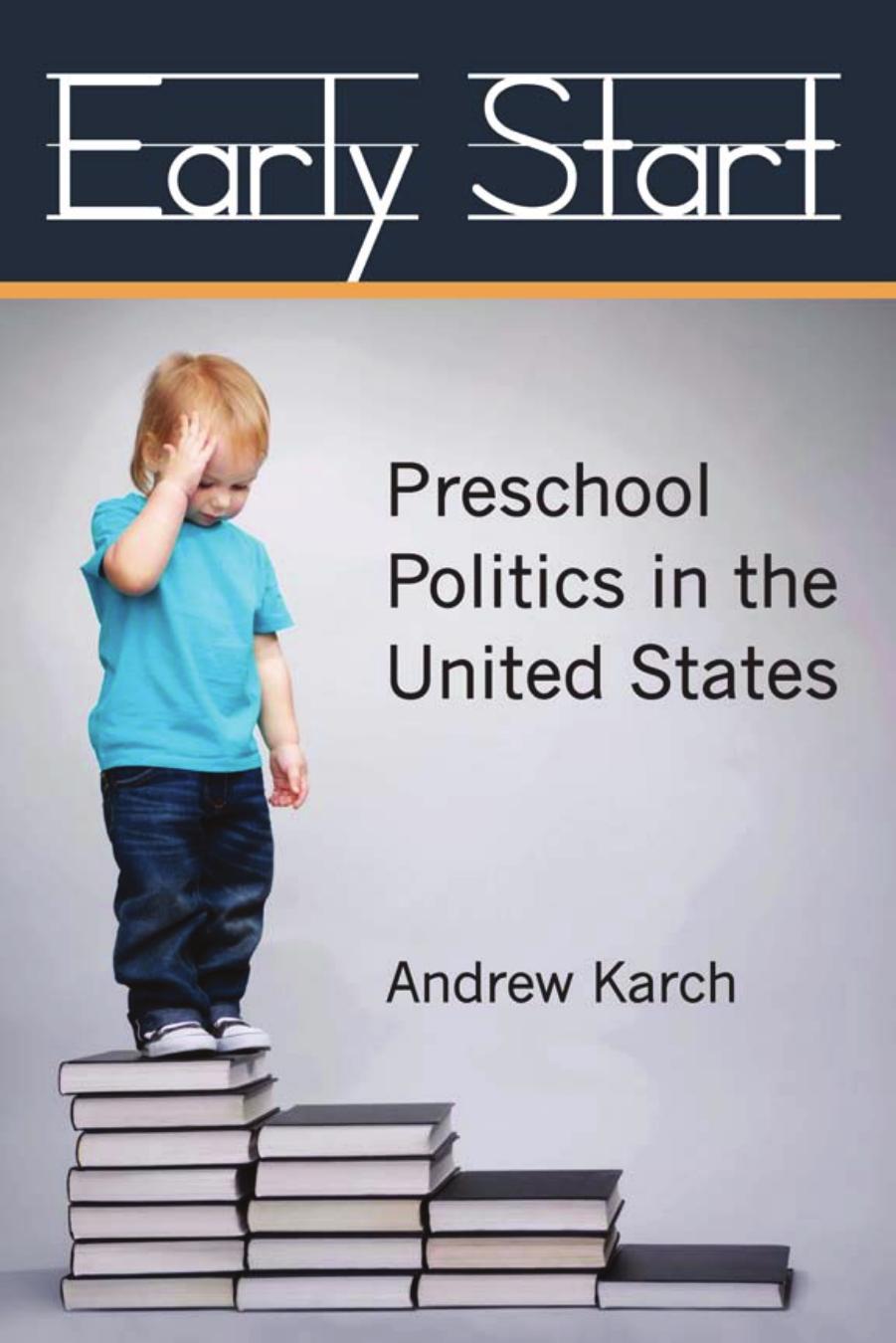
Author:Andrew Karch
Language: eng
Format: epub, pdf
Publisher: The University of Michigan Press
Published: 2018-02-15T00:00:00+00:00
The Prekindergarten Early Dropout Intervention Act of 1988
Members of Congress considered several proposals that were less ambitious than Smart Start. Senator Lawton Chiles (D-FL) introduced the Prekindergarten Early Dropout Intervention Act of 1988, which would have authorized grants to local educational agencies, community-based organizations, Page 146 âand nonprofit private organizations that operated early intervention programs for dropout prevention. The main goal of the legislation, according to Chiles, was âto reduce the number of children who later drop out of school by providing high-quality early education which focuses on the development of language and cognitive skills.â45 It would have provided twenty-five million dollars to programs for three- and four-year-olds. The Senate Committee on Labor and Human Resources held a hearing on the bill in May, but the chamber took no further action. Despite its limited legislative progress, the Senate testimony illustrated four important features of the debate over early childhood policy in the late 1980s.
First, early childhood education was increasingly viewed through an economic lens and framed as an investment. Multiple witnesses cited its cost-effectiveness. A major theme of the hearing was that every dollar spent on preschool would pay for itself by reducing long-term spending on various government programs. One witness said of high school dropouts, âMany of these children will, of course, drop out of school, but they will not drop out of our lives. They will linger to haunt our pocketbooks, if not our individual or collective consciences. They willâ¦fill our welfare rolls and our jails.â46 An academic researcher claimed that early childhood programs would reduce spending on the criminal justice system, welfare, and special education and would increase the taxable earnings of older youths.47 Other witnesses cited the results of the Perry Preschool Project and the recent report by the Committee for Economic Development in their calls for massive investments in prekindergarten and child care. Committee chairman Edward Kennedy summarized this line of argument: âWe have benefited in recent times from the very convincing evidence that this investment in early interventionâand it is an investmentâhas enormous potential.â48
Second, the bill's supporters generally envisioned a circumscribed role for the national government. A representative of the American Federation of Teachers argued that âthere is a federal role in providing leadership and support aimed at stimulating additional early childhood education services.â49 Another witness explained, âOne of the things that excites me about this bill is that it suggests that state and local agencies really do need to take a very strong role in implementing appropriate programs.â50 Multiple witnesses described the national government as an agenda-setting force that could highlight the significance of early childhood programming or as a potential funding source. Program development was generally viewed as something that was better left to service providers or state Page 147 âand local officials. Kennedy noted that national officials had âa lot to learn from the local experiences,â a sentiment that was not expressed during the hearings of the late 1960s and early 1970s.51 The Prekindergarten Early Dropout Intervention Act envisioned a demonstration
Download
Early Start: Preschool Politics in the United States by Andrew Karch.pdf
This site does not store any files on its server. We only index and link to content provided by other sites. Please contact the content providers to delete copyright contents if any and email us, we'll remove relevant links or contents immediately.
| Anthropology | Archaeology |
| Philosophy | Politics & Government |
| Social Sciences | Sociology |
| Women's Studies |
The Secret History by Donna Tartt(18975)
The Social Justice Warrior Handbook by Lisa De Pasquale(12172)
Thirteen Reasons Why by Jay Asher(8858)
This Is How You Lose Her by Junot Diaz(6848)
Weapons of Math Destruction by Cathy O'Neil(6233)
Zero to One by Peter Thiel(5745)
Beartown by Fredrik Backman(5694)
The Myth of the Strong Leader by Archie Brown(5476)
The Fire Next Time by James Baldwin(5398)
How Democracies Die by Steven Levitsky & Daniel Ziblatt(5186)
Promise Me, Dad by Joe Biden(5122)
Stone's Rules by Roger Stone(5060)
A Higher Loyalty: Truth, Lies, and Leadership by James Comey(4926)
100 Deadly Skills by Clint Emerson(4890)
Rise and Kill First by Ronen Bergman(4747)
Secrecy World by Jake Bernstein(4714)
The David Icke Guide to the Global Conspiracy (and how to end it) by David Icke(4665)
The Farm by Tom Rob Smith(4477)
The Doomsday Machine by Daniel Ellsberg(4464)
